Why We Chose LVP Waterproof Flooring
Choosing the right flooring for Cottage on Blackberry Hill meant balancing charm with practicality—and fitting within our budget. We loved the timeless warmth of hardwood, but the higher cost in this area, along with the higher humidity and maintenance, pushed us to look for a smarter alternative. That’s when we discovered luxury vinyl plank (LVP): a budget-friendly option that mimics the look of real wood without the upkeep. It’s incredibly easy to clean, stands up to everyday life, and still fits beautifully with our cozy, cottage aesthetic. In the end, LVP gave us the look we wanted with the durability and price point we actually needed.
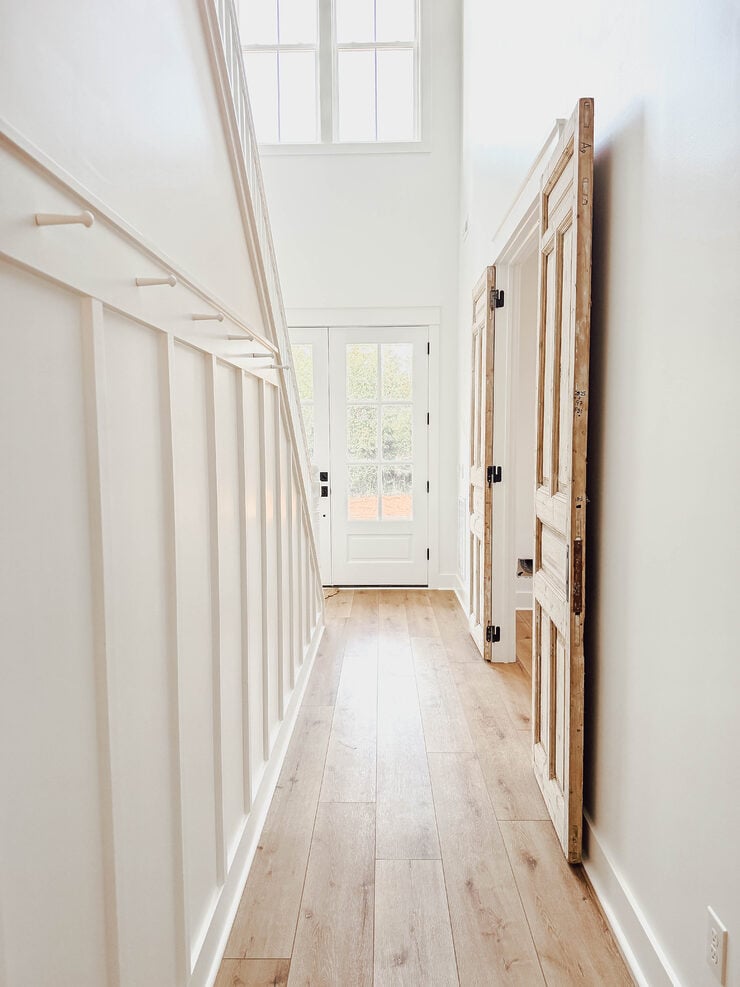
There are so many decisions to make when you’re building a home. Every detail, large or small, combine to create the look and design you’ve imagined. Whether it’s lighting, sinks, flooring, or paint, it can feel like a lot to choose just the right thing. We’ve been through the building process four times, and I understand! This time around I felt very confident about most of my choices that I chosen or designed ahead of time. But the flooring was the trickiest selection, and the one that took me the most time to decide upon.
If you are in a similar situation–either building or remodeling–and looking for a beautiful flooring that will fit your budget and your style, keep reading!
Table of contents
Affiliate links are included below for your convenience. Please see my full disclosure.
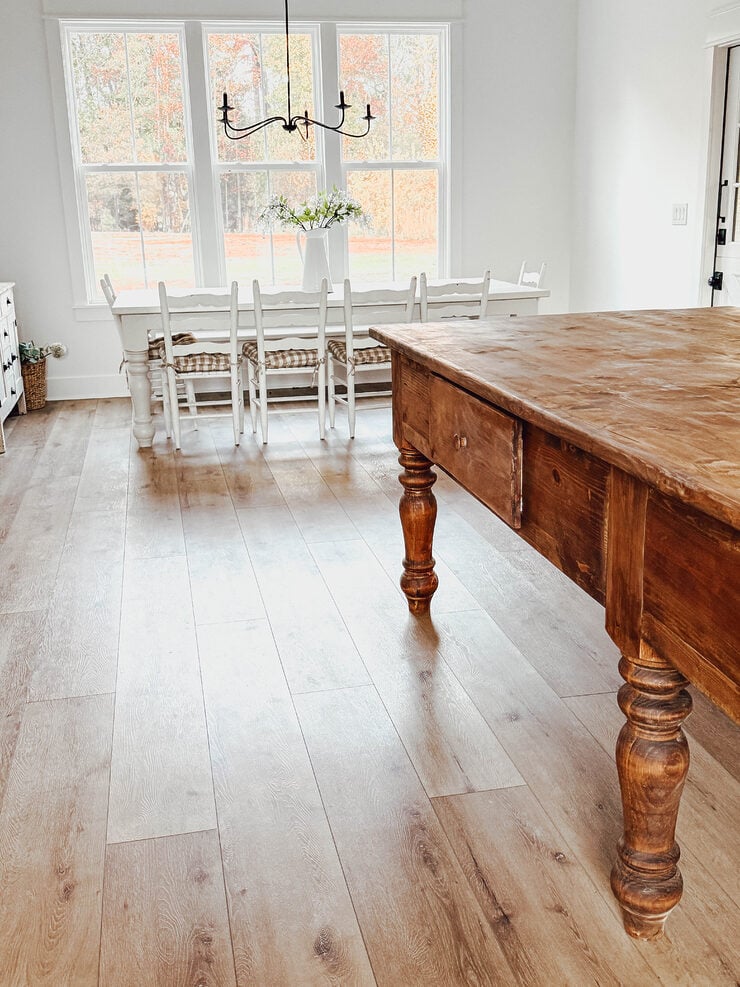
Why we chose LVP
All the homes we’ve built and lived in had hardwood flooring. I’ve always preferred the aesthetic, how it feels underneath my feet, that you can refinish rather than replace, and the overall durability and quality. I really wanted them in this home as well, and that had been my plan going into it. But then…we discovered that here in this area, hardwood is MUCH more expensive. Even if we got a really good deal in the hardwood itself, with labor, it was nearly triple the cost of any other option. Since we would have no carpet throughout the house, it was also more square footage overall for any wood flooring than we had previously done. So I started looking into my options.
Our builder suggested LVP, and in this area, even very expensive multi-million dollar homes have installed this flooring. I wasn’t quite convinced, and heavily researched every other possible option. In the end, the numbers won, and it was time to figure out which one would work the best for our home and its cottage style
Coretec Cairo Oak
To say I looked at hundreds of options of LVP flooring is not an understatement. I was looking for a very specific look: something that would fit my cottage farmhouse style, neutral brown in color (no grays, not orange or yellow), wider planks, have some dimension and interest while not being too uniform, and as natural a feel as possible. Not all LVP is waterproof, but that was also a must for me, along with a thickness and durability to withstand a lot of traffic. Not only did I scour online, I went to every flooring shop I could find within miles, and brought home at least 20-25 samples to match them up in real life with our antique doors, wall color, and cabinetry.
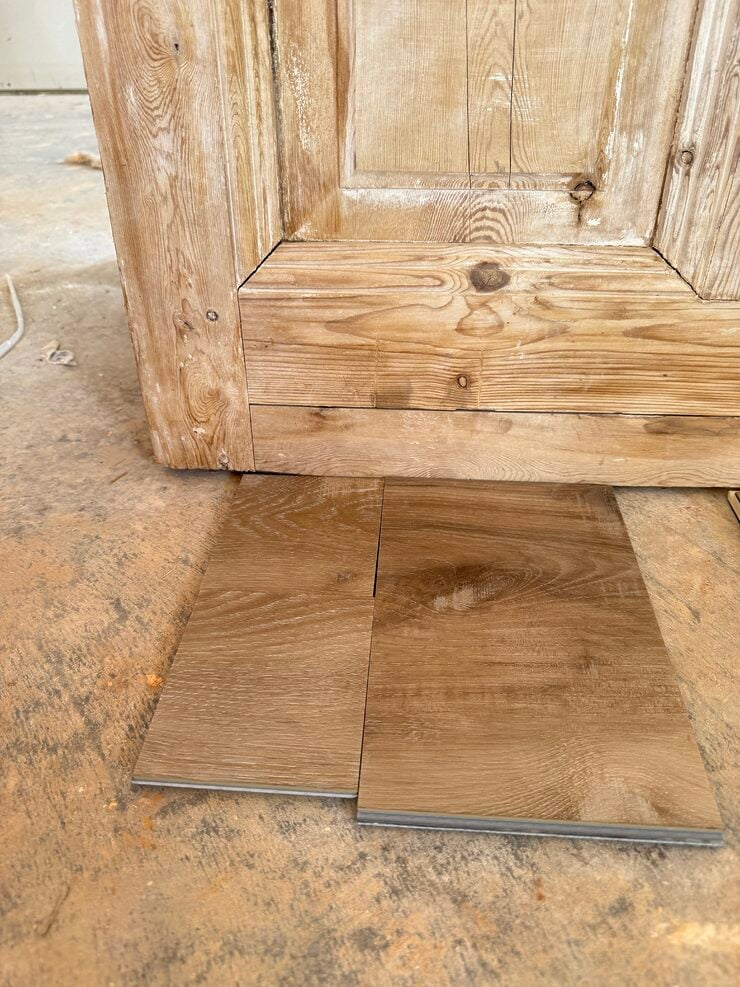
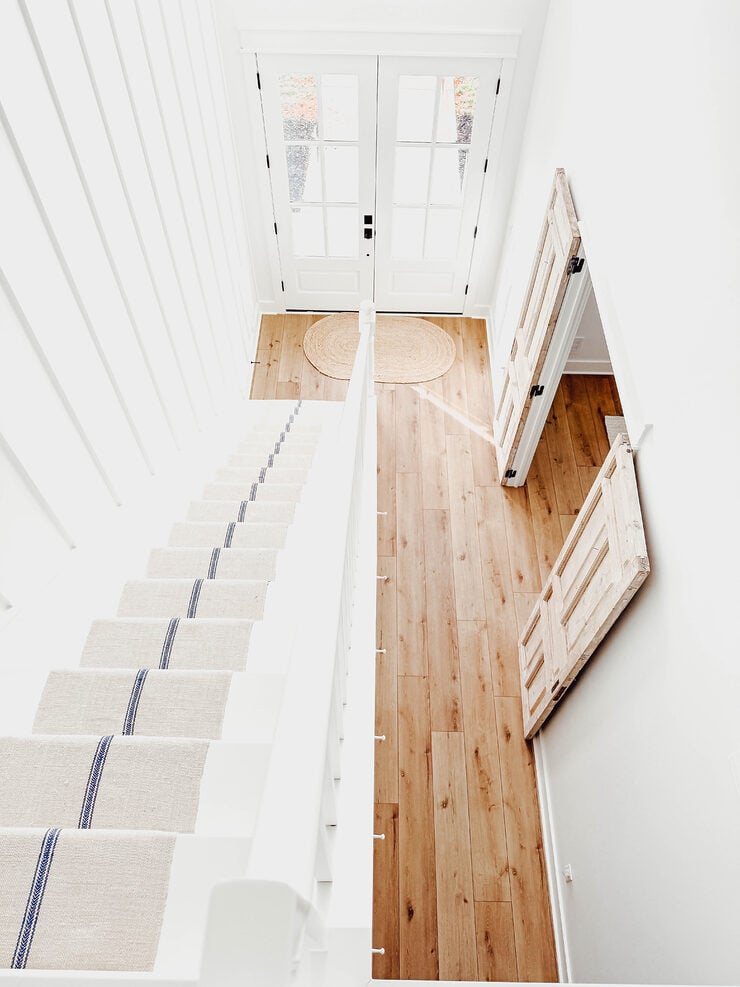
Finally I found Coretec Cairo Oak, and as soon as I brought it home, I knew it was the one. It checked all the boxes! It’s always nerve wracking when selecting flooring, because there is so much of it–and you’re only seeing a small sample. But when I put it up against every other element in our home, and checked it in different rooms and light sources, it held up.
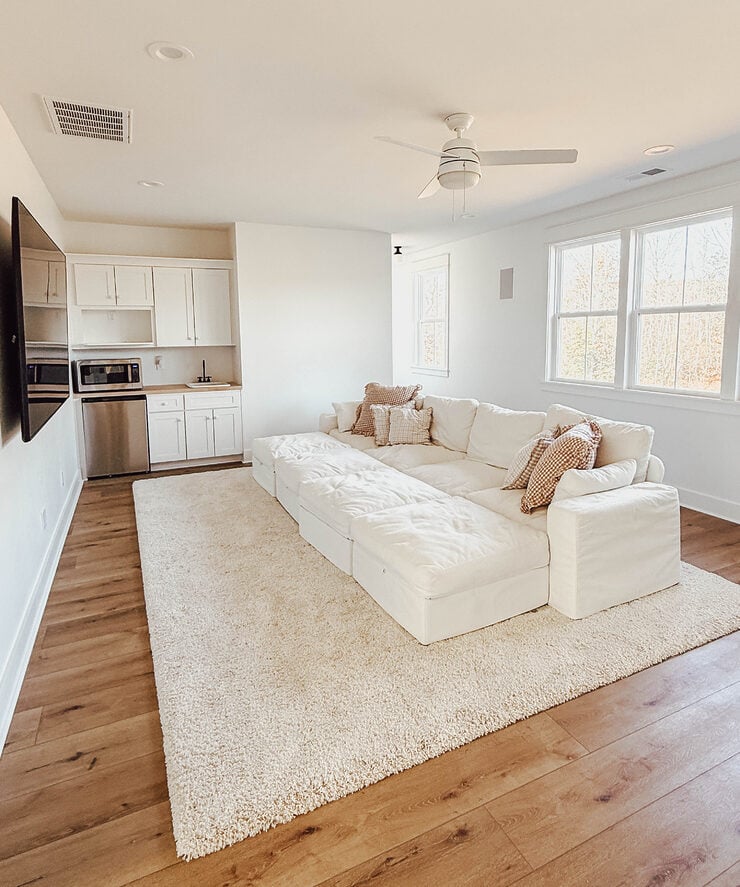
On the day of install, I was nervous to go look — but I was so happy when I walked into my master bedroom and saw it on the floor.

Living with LVP
Maintenance –
It is very easy to clean, and keep clean. I’m able to use a steam mop, which I’ve never been able to do before with hardwood floors. Some of this will depend on the specific color and type, but it’s actually hard to see dirt! (Still deciding if this is a good or bad thing…) Very low maintenance overall, and I don’t worry about my kids on this flooring for the most part. That said, it has scratched more easily than I thought it might. As we were moving in, we ended up with a pretty long scratch in the kitchen. We will be able to remove the planks and replace them, but I realized it’s not as hardy as I assumed it would be. Overall though, I give it an 8 or 9 out of 10.
look & feel
It definitely feels more plastic-y than hardwood under the feet, which is to be expected. But I’ve been pleasantly surprised that I’ve not minded it as much as I thought that I would. We went with one that has a high durability wear level, which also helps with comfort and softness underfoot as well as the noise factor. Again, this will really be dependent on the specific LVP, since they can really range in quality, thickness, and design.
I really love how they look in our home, and ultimately I’d still prefer hardwood if it was in my budget, I’m happy with them.
Video
Take a small tour of our home to see the flooring in different lighting and spaces…
Hardwood vs. LVP
There are pros and cons of each, and after living with both of them, I’ve added my own to the list. While I will always love hardwood, and will likely choose it in a future home, I’ve been happily surprised at how much I like LVP, and have no regrets! Out of hardwood, engineered hardwood, and waterproof LVP that we’ve had, LVP would be in the middle, above engineered hardwood. I found that to be the most difficult to maintain, especially with six busy kids.
All of this comes down to your circumstances and priorities — budget, size/sf of home, “starter vs forever”, kids or pets, maintenance preferences, and personal style. Hopefully this list will help you make your own flooring decision.
There are also differing levels of LVP, and the higher end has vastly improved over the years, giving even more layers to the options if you decide to go that way.
Hardwood Flooring Pros
what homeowners love long-term
- Timeless, high-end look
- Real wood grain is unique and hard to replicate — especially noticeable across an entire home
- Common in more expensive homes and still seen as a premium upgrade
- Natural look, and unique feel – no repeated pattern
- Adds resale value
- Buyers consistently prefer hardwood and will often pay more for it
- Can be refinished instead of replaced
- Scratches, dents, and wear can be sanded out multiple times
- Long lifespan
- Often lasts 40–100+ years with care
- Feels more “solid” and authentic
- Many homeowners say it simply feels better underfoot
Hardwood Flooring Cons
what families complain about
- Scratches easily (especially with dogs/kids)
- Pet nails, toys, and everyday life leave visible wear
- Not waterproof (big issue in real homes)
- Spills, leaks, and wet shoes can cause warping or staining
- More of an issue in high humidity climates
- High maintenance
- Requires refinishing, special cleaning, and humidity control
- Expensive upfront
- Often 2-3× the cost of LVP installed
- Stress factor in busy homes
- Many families say they feel like they have to “protect” the floors constantly, always worried about scratching
LVP Pros (Luxury Vinyl Plank – Waterproof)
why families choose it
- Waterproof (huge for real life)
- Ideal for kitchens, bathrooms, mudrooms, and spills
- Extremely kid & pet friendly
- Resists scratches, dents, and heavy traffic
- Low maintenance
- Sweep + mop — no refinishing ever
- Much more affordable
- Roughly $4–$7/sq ft vs. $8–$14+ for hardwood
- Install labor costs more expensive
- Comfort & safety
- Slightly softer, quieter, and less slippery for kids and pets
- Less stress in daily life
- Many families say they can “live normally” without worrying
LVP Flooring Cons
what people regret or notice over time
- Doesn’t feel fully “real”
- Can look great—but still lacks the depth and texture of wood
- Lower resale value
- Especially in higher-end homes — dependent on area & local markets
- Can’t be refinished
- Damaged planks must be replaced
- Shorter lifespan
- Typically 15–25 years
- Matching later can be hard
- Styles get discontinued – dye lot may not match, and have to replace more than you want to in order to do so
- Some people feel it’s “plasticky”
- Especially in large, open homes or luxury builds
FAQ
Luxury vinyl plank (LVP) flooring is a type of synthetic flooring designed to look like real hardwood while offering much more durability and ease of care. It’s made in layered planks that mimic the shape, texture, and grain of wood, but with a protective surface that resists scratches, moisture, and everyday wear.
For highest durability, 6-8mm is recommended, along with a a wear level of 20-22. A thicker subfloor is also important, as it helps with comfort and noise reduction. Proper underlayment is also key to block moisture.
More home design ideas
Thanks so much for stopping by! Join me on Instagram for even more ideas and inspiration…I’d love to see you there. 🖤
